
Geopolitical volatility has reached a fever pitch as reports of naval clashes in the Strait of Hormuz and rumors regarding the Iranian leadership send Brent Crude surging. Markets are currently balancing these severe escalations against hawkish Fed commentary and a “stretched” semiconductor sector, demanding extreme caution as we approach the US open.
1. The Primer
Global markets are grappling with a dual-threat environment of escalating military friction in the Middle East and a Federal Reserve that remains deeply concerned about “wrong way” inflation. With Brent Crude climbing $2/bbl on reports of mine-laying in the Strait of Hormuz, the pre-market is characterized by a flight to safety and a reassessment of the recent equity rally’s breadth.
2. The Macro Field
The macro narrative is being dictated by a collision of geopolitical “black swan” events and hawkish central bank signaling. Fed’s Goolsbee has effectively dampened hopes for a pivot, noting that inflation was elevated well before the current energy shock and is currently trending in the “wrong direction.” This hawkish backdrop is compounded by reports from the Strait of Hormuz, where the U.S. military has reportedly disabled vessels and Iran is allegedly laying mines, threatening a permanent disruption to global oil flows. Furthermore, the “Department of War” (formerly DoD) releasing tranches of UAP/UFO files and shifting troop deployments to Poland adds a layer of unconventional uncertainty to the traditional macro landscape.
3. The Intraday Edge
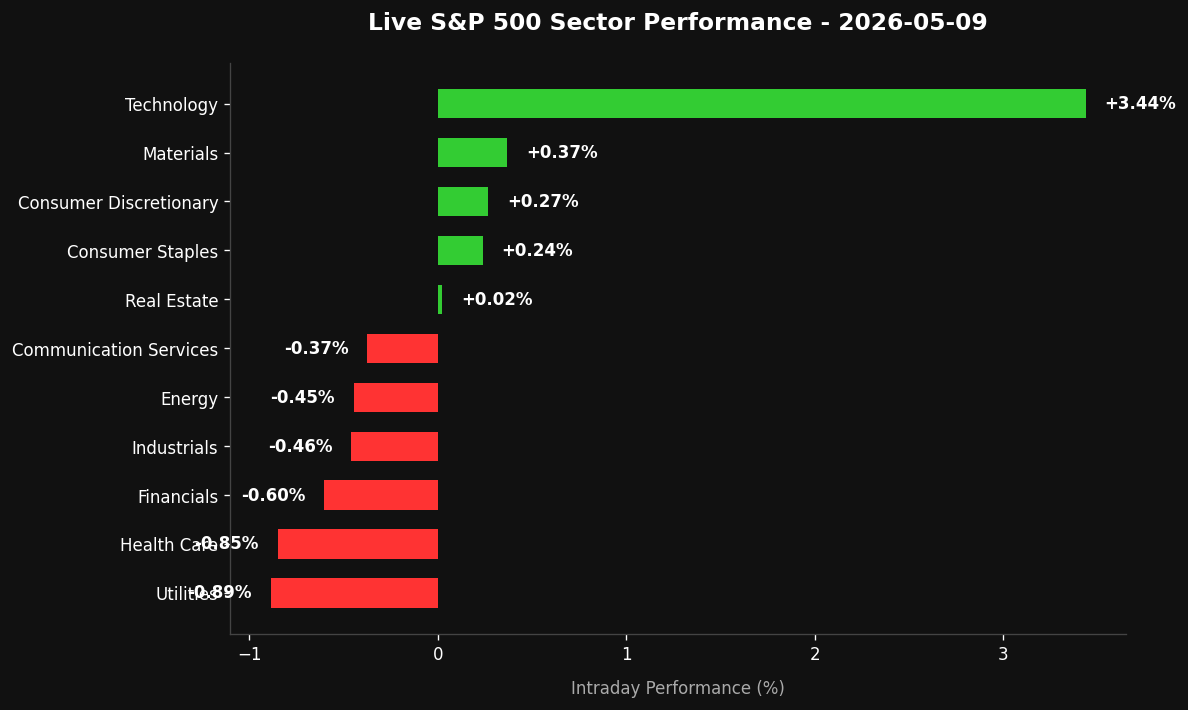
The primary sector focus for the session is Energy ($XLE, Brent Crude) as Goldman Sachs warns that disruptions in the Strait of Hormuz are likely to persist into the second half of the year. Traders should monitor the $90 level on Brent; a sustained break above this on confirmed naval engagement headlines could trigger a rapid repricing of global inflation expectations. Conversely, Barclays identifies the semiconductor sector as “stretched,” suggesting that the S&P 500 rally may be capped without a de-escalation in the Middle East. If the reported “sporadic clashes” between U.S. and Iranian vessels intensify, expect a sharp rotation out of high-beta tech and into defense and energy names. Key support for the S&P 500 sits at the 5,180 level, while a failure to hold 5,200 could signal a deeper retracement driven by geopolitical de-risking.
4. The Execution (Psychology)
In an environment saturated with high-impact headlines—ranging from the rumored death of the Iranian Supreme Leader to the pardon of Binance founder CZ—the “Signal-to-Noise” filter is your most valuable asset. The elite performer avoids “headline chasing” on unconfirmed reports from social media; instead, wait for the market’s reaction to be codified in price action and volume. Discipline today means resisting the urge to trade every “breaking” tweet and instead focusing on the OODA loop (Observe, Orient, Decide, Act) to ensure you are not caught in a liquidity trap during rapid, news-driven reversals.
5. Bottom Line
Prioritize capital preservation as geopolitical tail risks manifest; look to play the momentum in Energy while maintaining a defensive posture in “stretched” Tech sectors until the Hormuz situation stabilizes.
Leave a Reply